
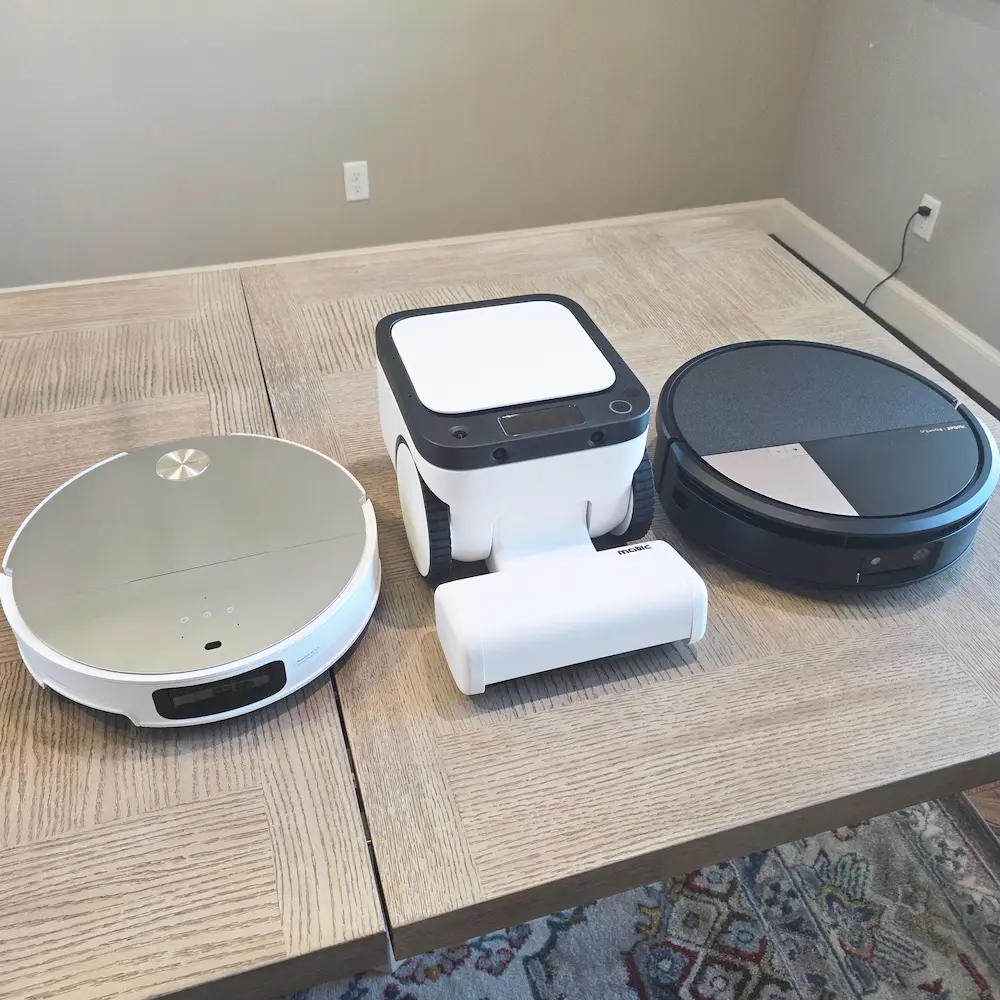



In this review
In this review
Anyone who has owned a robot vacuum has felt the pain of:
- Furniture-sized docking stations
- Loud vacuums scaring pets or kids
- Cutting hair out of tangled brush rolls
- Cleaning dirty, smelly mop stations
- Wasting hundreds, even thousands of dollars on machines that just don’t work
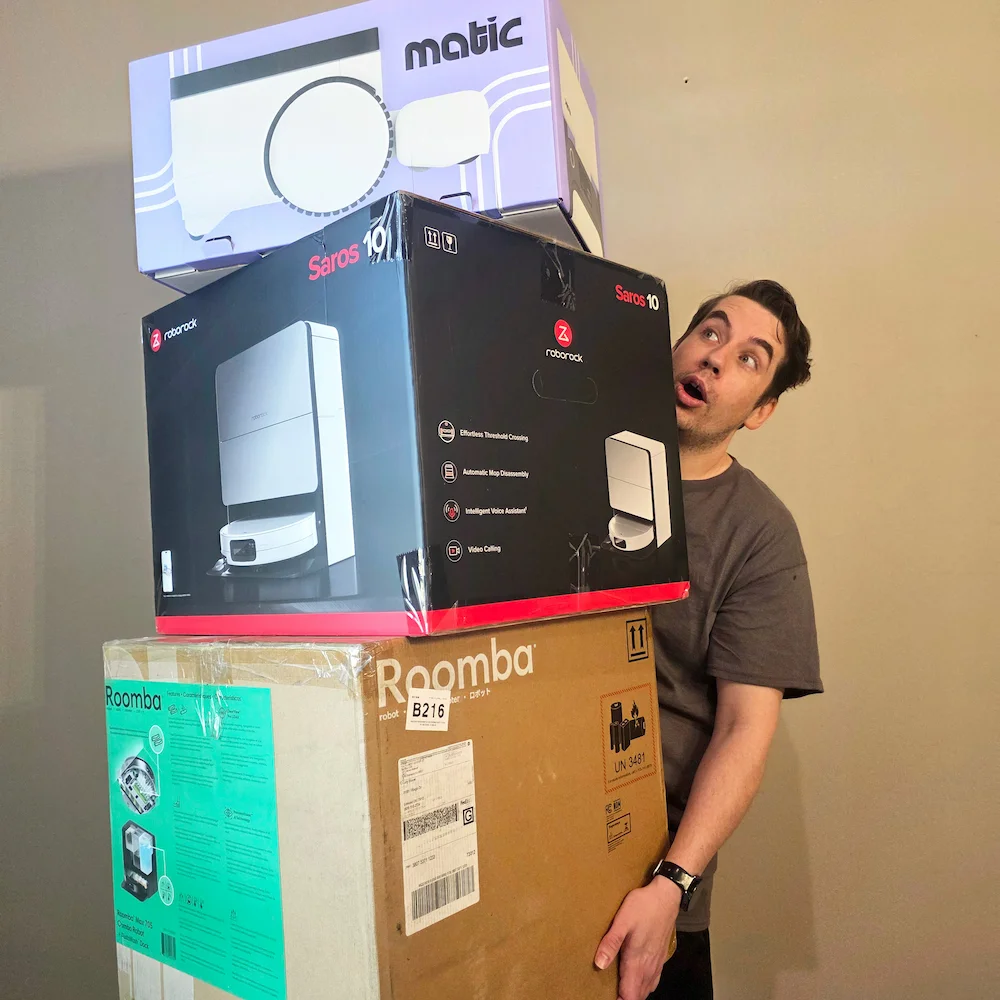
To find a robot vacuum that actually works, we tested the top three vacuum & mop robot combo vacuums that claim to clean more effectively than traditional models: Matic, Roborock Saros 10, and Roomba Max 705 Combo on: features, effectiveness, autonomy, and price. Read on to find out the winner!
What to Look for in a Robot Vacuum
To see which robot vacuum actually cleans best with the least amount of human help, our editor, Dylan, tested Matic, Roborock Saros 10, and Roomba Max 705 Combo back-to-back for 3 weeks. What Dylan - long-time user of robot vacuums and dad to 2 kids & 3 Australian Cattle Dogs - looks for in a combo vacuum:
- Cleaning modes: A combo robot that vacuums and mops should automatically switch between modes.
- Navigation: A robot should be able to see and understand its surroundings to avoid obstacles and know where to clean.
- Cleaning effectiveness: The whole point of a robot vacuum is to clean the floors with minimal effort. Vacuums should actually suck up all debris and reach nooks and corners.
- Volume: Loud vacuums disturb pets and kids. A quiet robot offers the best experience for the whole family.
- Autonomy and maintenance: Technology should make our lives easier, not harder. Look for robots that require minimal supervision and maintenance.
- Data privacy: When bringing smart technology into your home, you should be certain that the data it collects is safe.
So how do Matic, Roborock, and Roomba compare? Let's find out.
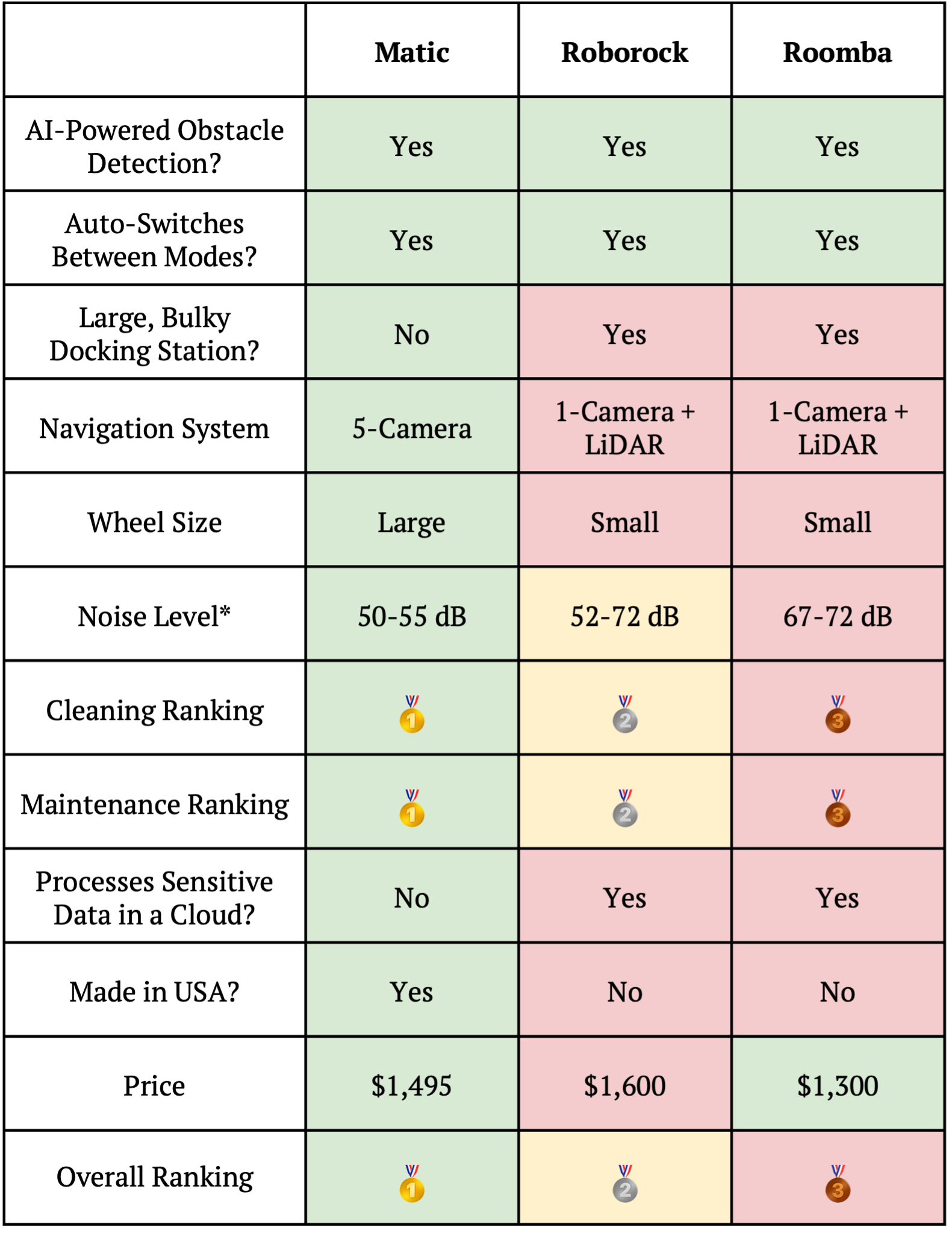
Green = best, yellow = mid-pack, red = last.
Features & Technology: Matic Wins
A robot vacuum is only as smart as the sensors that tell it where to go. The more accurately a robot can see its surroundings, the better it cleans – fewer missed spots, collisions, and rescue missions.
Robots typically use either LiDAR or vision navigation to move around. LiDAR uses a spinning laser to measure distances and build a 2D map of a room – it's good at telling the robot where the walls are, but it can struggle to identify what it's looking at. A vision system, on the other hand, uses cameras to see the world more like a human does: it can recognize a sock, a charging cable, or a pet, not just register that there's "something" in the way. For homes with kids, pets, or clutter, vision is best.
All three robots we tested create a map of your home and can auto-toggle between vacuuming and mopping. That’s a good thing. However, only one brand could actually perform these well.
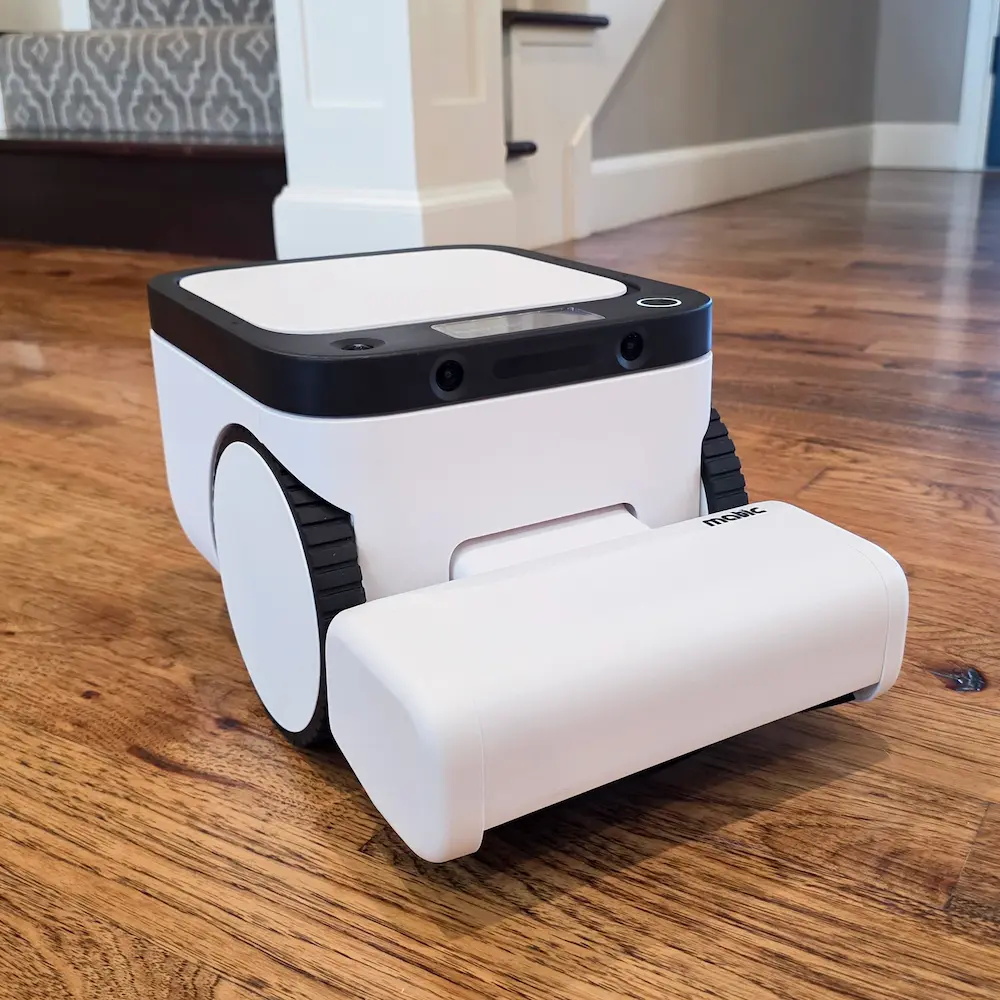
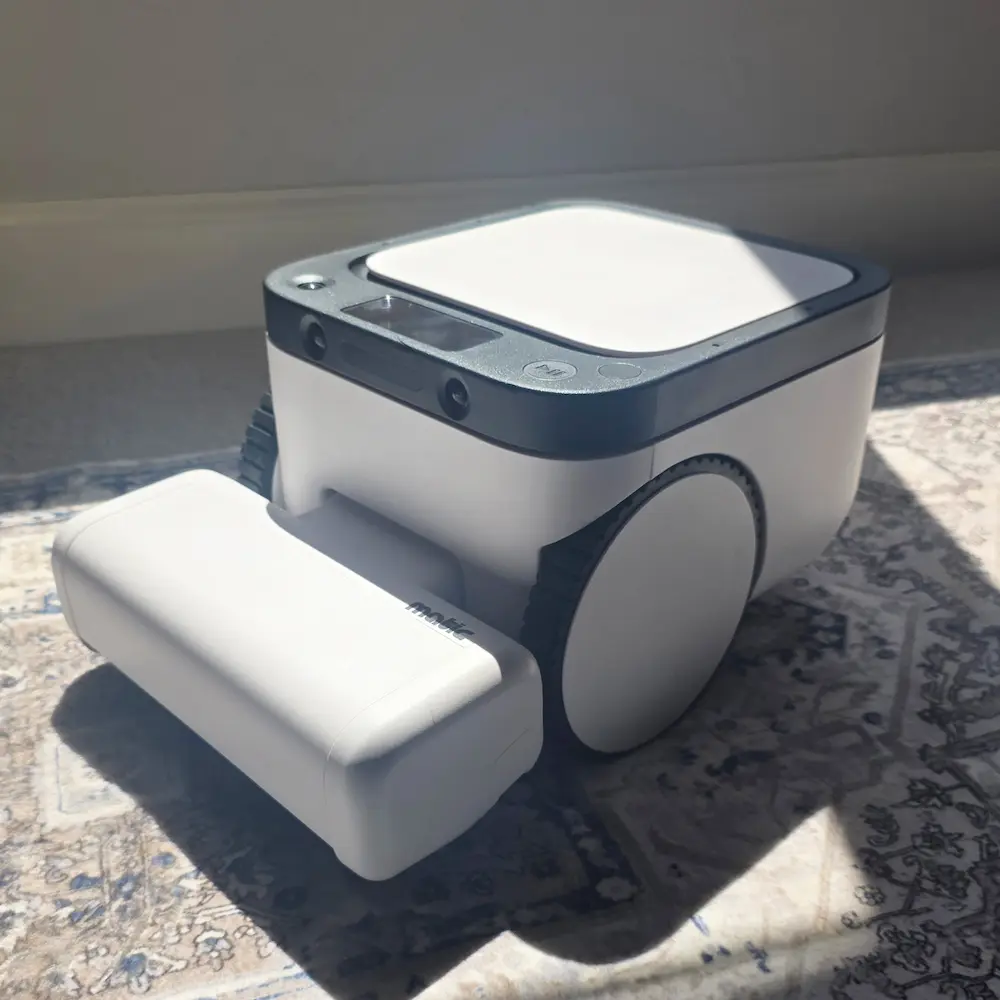
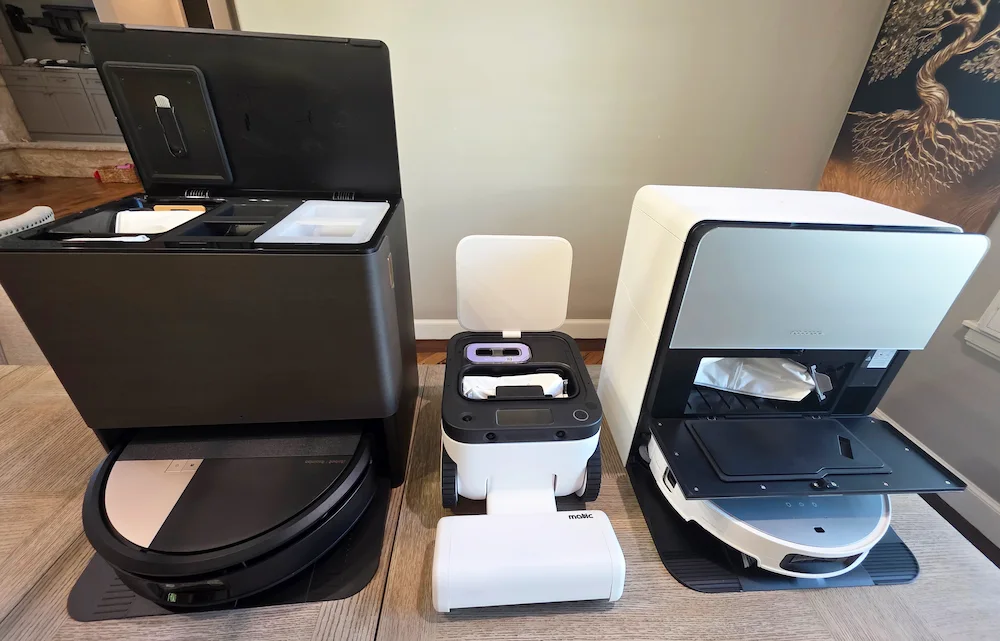
🥇Matic wins with the best navigation capabilities. Matic is the only vacuum in our test that uses a vision-only navigation system and comes equipped with large front wheels for traversing different terrains. With 5 cameras and near-infrared sensors, it sees and understands its surroundings like a human would, even in the dark. Dylan said Matic navigated "like a self-driving car" – it knew when furniture was moved and stopped with nearby foot traffic. He said Matic had no trouble avoiding obstacles, climbing carpets, or prioritizing where to clean. Matic's design is also a standout: a sleek, futuristic body with only a handful of components to maintain and a compact dock that's about the size of a shoebox (4.9" × 7.1" × 5.1") – roughly 1/25 the size of Roomba or Roborock’s.
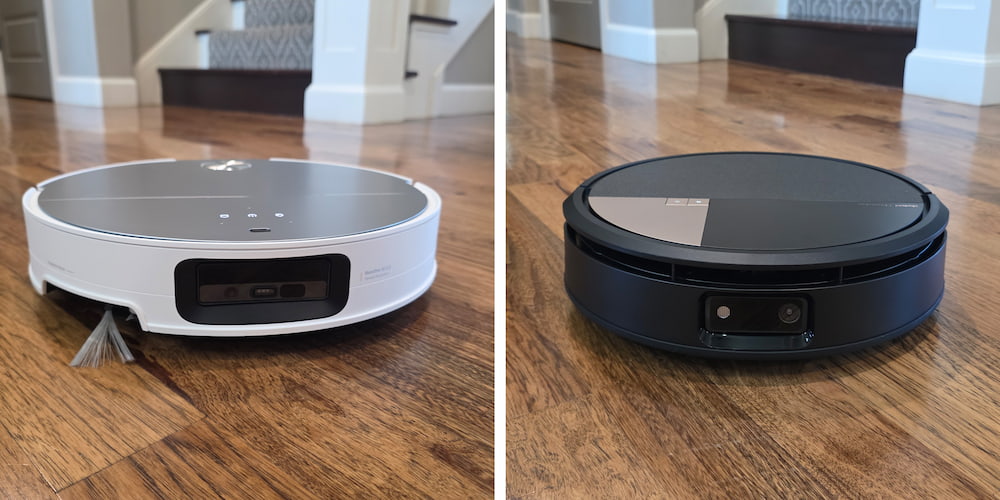
❌ Both Roborock Saros 10 and Roomba Max 705 Combo rely on LiDAR, small wheels, and furniture-sized docking stations. With only one camera each, they have a narrower field of view and less depth perception than Matic's 5-camera setup, which can mean less reliable object recognition in homes with kids or pets. Plus, smaller wheels make it harder to transition between floor types – Dylan said neither brand could climb his shag rug. Both Roborock and Roomba have large docking stations (Roborock’s measures 16" × 17" × 18.5"; Roomba’s is 18" × 17" × 17") and significantly more components to maintain than Matic, meaning more upkeep and more places for grime to build up.
Effectiveness & Volume: Matic Wins
The best robot vacuum is only useful if it actually cleans the floors - without bothering anyone in the house. Dylan tested each for 1 week, measuring volume levels and taking note of how well the robots cleared the floors of spills and pet hair.
Measured Volume
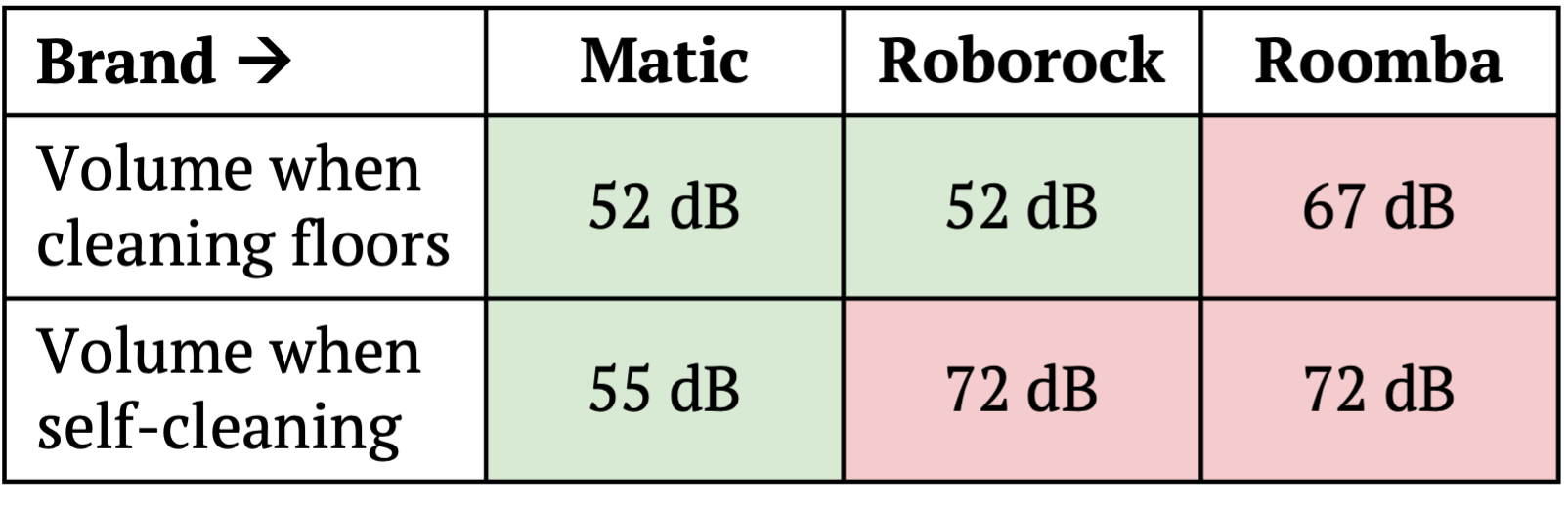
🥇Matic wins as the quietest and most effective machine. Cruising at 50 dB - about as loud as a refrigerator hum - and hitting just 55 dB when self-cleaning, Matic was quiet enough to clean without disturbing Dylan’s kids or pets. For comparison, a traditional vacuum hits between 60 - 85 dB.1 Dylan scheduled Matic to clean overnight – he slept through it and woke up to completely clean floors. No dusty corners missed, no dog hair stuck in rugs, and not a single crumb left behind. It mopped the entire floor without needing any water refills – even the stubborn dried milk stains from his kids were gone.
🥈Roborock Saros 10 comes in second with more debris left behind and louder self-cleaning. At around 52 dB when cleaning, Roborock is quiet enough to ignore, but not as quiet as Matic. Dylan said Roborock didn’t bother anyone when mopping or vacuuming, but sounded like an engine starting when cleaning itself at the dock. Hitting 72 dB, it triggered barking and complaints from kids. Roborock was also less thorough than Matic, leaving debris behind in corners and by kitchen baseboards. It could only hold enough water to mop one room at a time, and had to return to the dock frequently (and loudly) to get a water refill.
❌Roomba Max 705 Combo is the loudest and least thorough robot. It cleans at about 67 dB – as loud as some traditional vacuum cleaners,1 and hits about 72 dB when self-cleaning. Dylan’s kids wouldn’t stay in the same room as Roomba, saying it’s too annoying, and he was disappointed that it was too loud to run overnight. Roomba also has the weakest cleaning performance of the group – it left entire messes behind, especially in corners. Dylan said the mopping functionality works well enough, but it struggled to pull dog hair up from his carpets.
Autonomy & Ease-of-Use: Matic Wins
The best robot vacuums should help keep the house clean and save us time. That’s why we compared the autonomy and ease-of-use for each:
🥇Matic wins as the most intelligent robot with the least maintenance required. In Dylan’s test, Matic effectively avoided obstacles all on its own – no bumping into furniture or getting stuck halfway up a carpet. He said it was easy to schedule Matic to clean overnight – after setting it up, he woke up to clean floors every morning without having to touch the vacuum again. During his week-long test, Dylan performed zero maintenance on Matic outside of filling the water tank and changing the dust bag.
🥈Roborock Saros 10 takes second place with mid-tier navigation and higher maintenance requirements. Dylan never needed to rescue Roborock while cleaning, but he reported instances of it getting stuck at the docking station. With smaller wheels than Matic, it can’t climb up thick rugs – and got stuck on Dylan’s shag rug more than once. Dylan said Roborock’s vacuum roller was the most likely to get tangled with pet hair, requiring manual removal. He was especially yucked by the mop roller, which started to smell bad after just a few days and had to be manually washed. Unlike Matic, Dylan couldn’t set-and-forget Roborock - he found himself troubleshooting the vacuum almost daily.
❌ Roomba Max 705 Combo is the dumbest and hardest to maintain. Dylan said Roomba bumped into objects (including his dogs), got tangled in cords and stuck on thick rugs, and occasionally needed rescuing – meaning he couldn’t set it overnight and guarantee a full clean. Roomba’s base station gets dirty quickly, and Dylan had to clean it after just one week. He was disappointed that debris isn’t sealed into a bag like Matic. When it was time to empty the dry waste bin, Dylan said a visible dust cloud puffed into his face and went back into the air.
Data Privacy: Matic Wins
A camera-equipped robot sees your entire home. That's why you want one that keeps your data on the device - not in the cloud, where a breach could expose your floorplan, footage, and home activity.
🥇 Matic processes everything on the robot itself - no video or audio collected, and no cloud relay. Your data never leaves your home, which means it’s gone for good when you delete it.
🥈 Roborock has solid on-device protections, but your data still leaves the home. Map data and usage information are collected and stored on cloud servers you can’t independently audit - and while you can request deletion, it requires contacting the company directly and anonymized data may still be retained.
❌ Roomba 705 Max Combo is the least secure, with Wi-Fi credentials, floorplans, object and pet detection, and GPS coordinates all stored in the cloud tied to your identity. You can request deletion, but it takes up to 45 days to process - and deleting your data means losing app functionality entirely.
Price: It’s a Tie
The best robot vacuums are worth the high price tag - saving hours per month of cleaning. Here’s how Matic, Roborock, and Roomba compare on cost:
🥇Roomba is $1300. The cheapest option, but with the worst cleaning performance and maintenance.
🥇Matic is $1495 for the most effective and autonomous cleaner.
❌Roborock is the most expensive at $1600.
Final Verdict: Matic is the Clear Winner
Which robot vacuum is best? After testing all three back-to-back for 3 weeks, we recommend the robot that cleans most thoroughly, runs the quietest, requires the least maintenance, and keeps your data private on the device itself. And that's Matic.
Our editor Dylan agrees: "Matic is my new daily robot vacuum. I schedule it overnight and wake up to completely clean floors – no crumbs, no tangled hair, no complaints from the kids."
Ready to try Matic and wake up to a clean home every day?


